
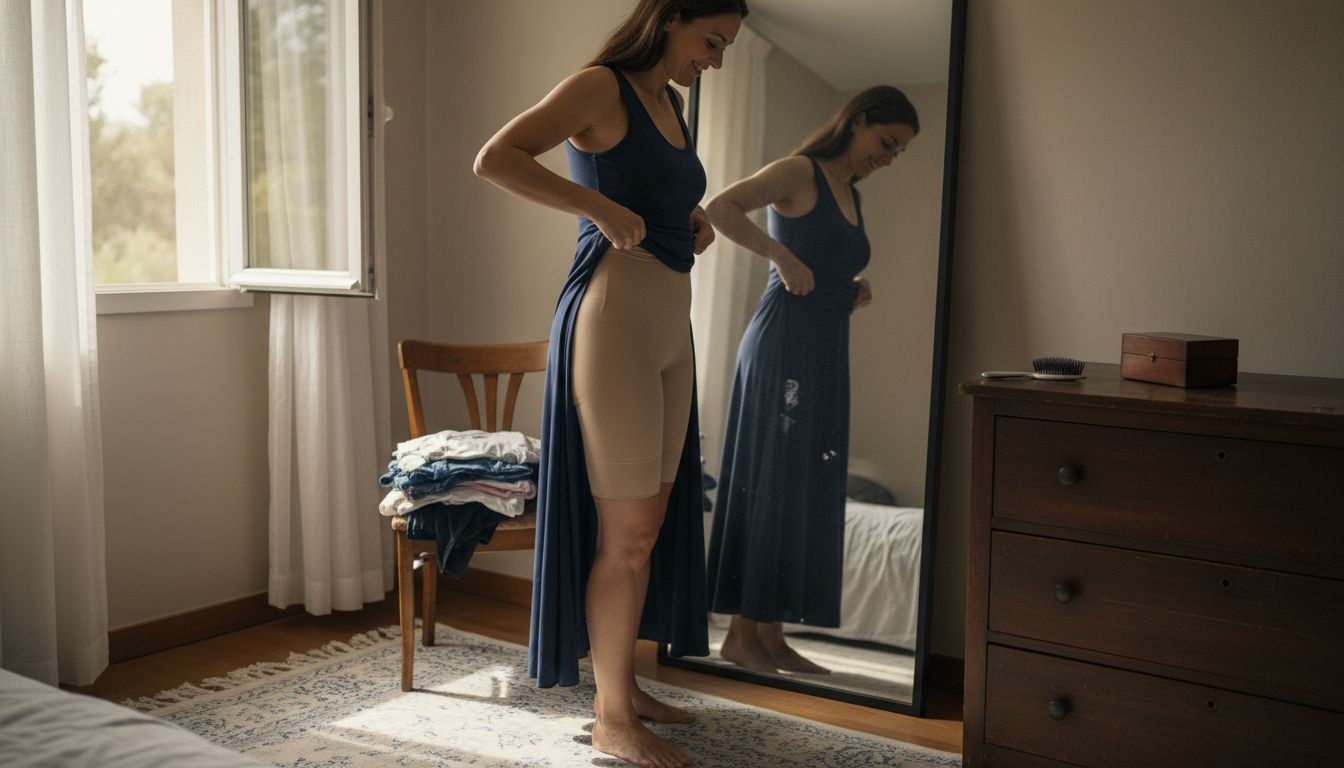
Finding shapewear that truly flatters can feel tricky when myths cloud expectations and comfort is a priority. For many American women, choosing the right compression garment is about more than smoothing lines under dresses or jeans. Shapewear offers a unique blend of body contouring and temporary confidence boost, but it’s important to separate fact from fiction. This guide reveals how shapewear really works, highlights the most common misconceptions, and shares the safest way to enjoy its benefits for any occasion.
Table of Contents
- What Shapewear Is And Common Misconceptions
- Shapewear Types And Their Unique Purposes
- How Shapewear Influences Body Perception
- Benefits And Drawbacks For Body Confidence
- Best Practices For Healthy Shapewear Use
Key Takeaways
| Point | Details |
|---|---|
| Shapewear Enhances Confidence | Shapewear provides temporary body smoothing, allowing individuals to feel more confident in their appearance. |
| Myths About Shapewear | Common misconceptions include the belief that shapewear can permanently alter body shape or that tighter garments yield better results. |
| Potential Health Risks | Prolonged wear of shapewear can cause health issues, including reduced circulation and discomfort; moderation is essential. |
| Best Practices for Use | Choose the right size and breathable fabrics, and limit wear to 4-6 hours to ensure comfort and safety. |
What Shapewear Is and Common Misconceptions
Shapewear represents specialized body-contouring garments designed to enhance physical silhouettes and provide smoother lines underneath clothing. These compression garments strategically smooth, shape, and support different body areas, offering women an opportunity to feel more confident in their existing wardrobe.
Understanding shapewear requires dispelling several prevalent misconceptions. Medical research indicates that many popular beliefs about these garments are scientifically unsupported. Common myths include:
- Shapewear can magically melt fat or spot-reduce body weight
- Prolonged wear guarantees permanent body transformation
- All compression garments function identically
- Tighter shapewear automatically means better results
In reality, shapewear serves primarily as a temporary body-smoothing solution. Compression garments work by redistributing body tissue and creating a more streamlined appearance, not fundamentally changing body composition. Temporary body contouring remains their primary function.
Healthcare professionals caution against excessive or prolonged shapewear usage. Research highlights potential medical complications such as:
- Potential gastrointestinal disruptions
- Reduced circulation
- Skin irritation
- Temporary organ compression
Users should prioritize comfort, choose appropriate sizes, and limit continuous wear to prevent potential health risks.
Pro tip: Select shapewear that feels comfortable and allows natural movement, rather than choosing the smallest possible size.
Shapewear Types and Their Unique Purposes
Shapewear has transformed dramatically from traditional restrictive garments to modern, specialized body-contouring solutions. Research indicates these compression garments now offer targeted support for different body areas, with designs tailored to specific aesthetic and functional needs.
The primary categories of shapewear include:
- Control Top Pantyhose: Smooths lower body and provides overall leg shaping
- Bodysuits: Full-body contouring with comprehensive coverage
- Waist Trainers: Focuses on creating an hourglass silhouette
- Corsets: Traditional garment for dramatic waist reduction
- Thigh Shapers: Targets specific lower body areas for smoother lines
Compression levels vary significantly across these garments. Some provide light smoothing, while others offer intense body restructuring. Abdominal compression research suggests different designs impact body mechanics uniquely, with fabric selection and construction playing crucial roles in performance.
Modern shapewear goes beyond aesthetic purposes. Post-surgical support, posture correction, and muscle stabilization have become additional functional benefits. Technological advancements in fabric design now allow breathable, flexible materials that provide support without extreme discomfort.
Here’s a concise overview of common shapewear types and their main characteristics:
| Type | Target Area | Typical Compression | Everyday Suitability |
|---|---|---|---|
| Control Top Pantyhose | Hips, thighs, lower body | Moderate | High, for daily wear |
| Bodysuit | Full body | Medium to firm | Moderate, for special events |
| Waist Trainer | Waist/midsection | Firm | Low, not for prolonged use |
| Corset | Waist | Very firm | Occasional or costume use |
| Thigh Shaper | Thighs, buttocks | Light to moderate | High, under fitted clothing |
Pro tip: Choose shapewear that matches your specific body contouring goal and provides comfortable, seamless integration with your existing wardrobe.
How Shapewear Influences Body Perception
Body perception research reveals that shapewear plays a profound psychological role beyond physical transformation. By creating a temporarily altered silhouette, these garments dramatically impact how women perceive and feel about their bodies, bridging the gap between personal body ideals and physical reality.
The psychological mechanisms of shapewear influence include:
- Instant visual body transformation
- Enhanced perceived body symmetry
- Increased self-confidence
- Reduced body image anxiety
- Improved clothing fit and appearance
Psychological impact goes deeper than surface-level changes. When women experience a smoother, more streamlined appearance, their internal narrative shifts. The physical compression creates a sense of control and empowerment, allowing individuals to feel more aligned with societal beauty standards.

Academic research demonstrates that shapewear’s influence extends beyond temporary physical modification. The psychological boost comes from feeling supported, contained, and confident. However, experts caution that shapewear should complement, not replace, body acceptance and self-love.
Pro tip: Select shapewear that makes you feel confident and comfortable, not restricted or uncomfortable.
Benefits and Drawbacks for Body Confidence
Health experts analyze shapewear as a complex garment that offers both significant psychological benefits and potential physical challenges. Understanding these nuanced impacts helps women make informed decisions about incorporating shapewear into their wardrobe and personal confidence strategies.
Key benefits of shapewear for body confidence include:
- Instant visual body smoothing
- Improved clothing silhouette
- Enhanced posture support
- Increased self-perception of body symmetry
- Psychological empowerment through controlled appearance
Potential drawbacks require careful consideration. Wearing shapewear too tightly or for prolonged periods can lead to unexpected health complications. Compression that restricts breathing, impairs circulation, or causes skin irritation ultimately undermines the confidence-boosting potential of these garments.
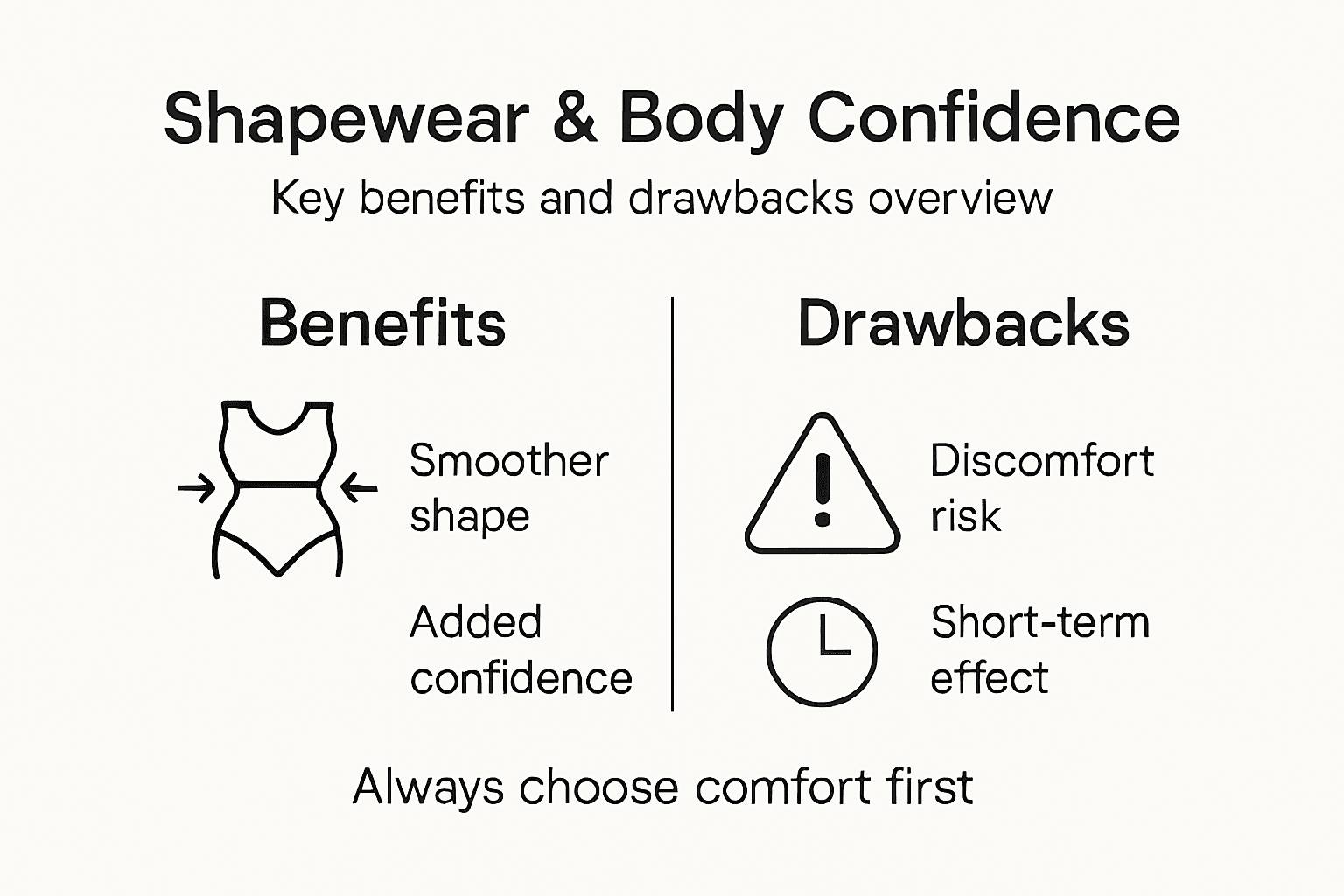
The critical balance lies in selection and moderation. Choosing shapewear that fits correctly, uses breathable fabrics, and allows comfortable movement transforms these garments from potential health risks to powerful confidence-enhancing tools. Women should prioritize their physical comfort and overall well-being over achieving a momentary aesthetic ideal.
The following table compares key benefits and potential risks to help guide smart shapewear choices:
| Benefit | Description | Potential Drawback |
|---|---|---|
| Enhances clothing fit | Smooths lines under outfits | Discomfort if too tight |
| Boosts self-confidence | Promotes positive self-image | May cause unrealistic ideals |
| Supports posture | Provides core stabilization | Can restrict movement |
| Temporarily slims appearance | Creates a streamlined silhouette | Temporary organ compression |
Pro tip: Select shapewear one size larger than your typical measurement to ensure comfort and prevent potential health risks.
Best Practices for Healthy Shapewear Use
Health experts recommend approaching shapewear as a strategic wardrobe tool that requires thoughtful selection and mindful usage. Understanding the nuanced guidelines helps women maximize comfort, effectiveness, and personal well-being while minimizing potential health risks.
Key best practices for healthy shapewear use include:
- Select the correct size (not too tight or loose)
- Choose breathable, high-quality fabrics
- Limit continuous wear to 4-6 hours maximum
- Listen to your body’s comfort signals
- Rotate between different shapewear styles
- Wash and maintain garments properly
Sizing and fit are critical components of safe shapewear use. Compression garments should provide gentle support without restricting breathing or circulation. Women should prioritize comfort and mobility over achieving an extreme silhouette, understanding that shapewear is designed to enhance natural body confidence, not create artificial discomfort.
Gradual introduction is key to successful shapewear integration. Start with shorter wear periods, pay attention to how your body responds, and be willing to adjust or remove the garment if you experience any physical discomfort. The goal is to feel empowered and supported, not constrained or compromised.
Pro tip: Conduct a “comfort test” by wearing shapewear for short intervals at home before committing to all-day wear.
Boost Your Confidence with the Right Shapewear Solution
Feeling confident in your own skin starts with comfort and the right shapewear that supports your body’s natural curves. This article highlights common challenges such as discomfort from tight garments and the need for shapewear that enhances body image without compromising health. At Saga Women, we understand the importance of balancing effective contouring with breathable, well-fitting options that empower you to feel your best every day.
Discover our curated collection of Shapewear Bodyshapers designed to gently shape and smooth your silhouette without unnecessary compression. Whether you want subtle support or firmer control, our selection prioritizes comfort to help you overcome those typical shapewear pain points.
Take control of your body confidence by exploring our range at Saga Women. Shop now to experience shapewear that supports your style and well-being with free US shipping and a 30-day easy return policy. Don’t wait to feel empowered in your clothing – your perfect fit awaits.
Frequently Asked Questions
What is shapewear and how does it work?
Shapewear is specialized body-contouring garments designed to enhance your silhouette and provide smoother lines under clothing. These compression garments work by redistributing body tissue to create a more streamlined appearance, serving primarily as a temporary body-smoothing solution.
What are the common misconceptions about shapewear?
Common misconceptions include the beliefs that shapewear can melt fat, guarantee permanent body transformation, or that all compression garments function the same. In reality, shapewear primarily provides temporary body contouring without fundamentally changing body composition.
How can I safely use shapewear without risking my health?
To use shapewear safely, select the correct size, choose breathable fabrics, limit continuous wear to 4-6 hours, and listen to your body’s comfort signals. Ensure the garment provides support without restricting your movement or circulation.
What are the different types of shapewear and their purposes?
There are various types of shapewear, including control top pantyhose, bodysuits, waist trainers, corsets, and thigh shapers. Each type targets specific body areas and offers different levels of compression to cater to various aesthetic and functional needs.
Recommended
- 7 Ways Shapewear Boosts Confidence in Everyday Life – Saga Women
- Top 7 Waist Cinchers Comparison – Expert Comparison 2025 – Saga Women
- Why Invest in Shapewear: Confidence and Everyday Wear – Saga Women
- What Is Shapewear Collection? Complete Guide for Women – Saga Women
- What Is Confidence in Beauty? Complete Guide– Pure Light Botanical Beauty
- Understanding Lipstick for Thin Lips: Boost Your Smile – Luméra Cosmetica
- The Psychological Impact of Hair Extensions | Naturyl Extensions


Hinterlasse einen Kommentar
Diese Website ist durch hCaptcha geschützt und es gelten die allgemeinen Geschäftsbedingungen und Datenschutzbestimmungen von hCaptcha.